Publications

TLPC  Participates in the SEAPC-Net Permanent Members’ Meeting

Dili, 12 January 2026 – On Monday, the Press Council of Timor-Leste (CITL) hosted the Southeast Asian Press Council Network (SEAPC-Net) Permanent Members’ Meeting via an online Zoom platform.
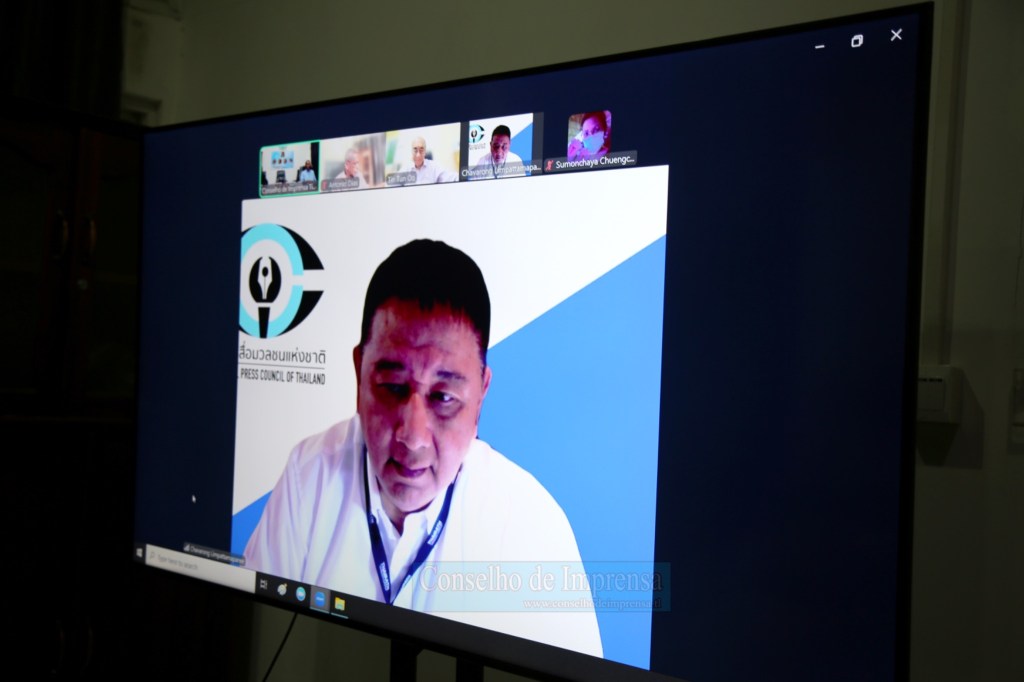
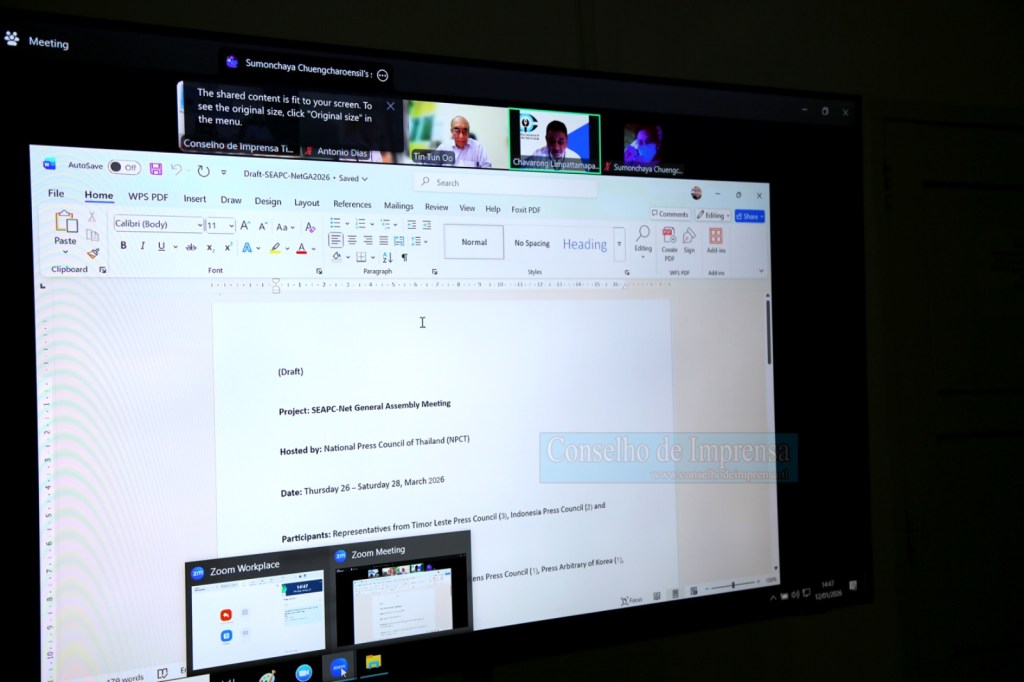
The SEAPC-Net Permanent Members’ Meeting began with an introduction by the SEAPC-Net Secretary General, Mr. Benevides Correia Barros. The meeting covered six (6) agenda items, namely: Welcome and Introductions; discussion on the Board of Directors (B.O.D.); discussion on preparations for the General Assembly; discussion on the SEAPC-Net annual membership fee; miscellaneous matters; and plans for the next meeting.

The SEAPC-Net President was unable to attend due to health conditions. The meeting was attended by Mr. Chavarong, President of the Thailand Press Council, accompanied by his Secretary, Ms. Summonchaya; Mr. Tin Tun Oo, President of the Myanmar Press Council; and Ms. Suzana Cardoso, who serves as both a Council Member and Director of SEAPC-Net Timor-Leste. Also present were Mr. Sudrajat from Indonesia, including the Executive Director, Director of DRII, and the SEAPC-Net Secretariat.

During the meeting, Council Member Mr. Benevides spoke about the Board of Directors meeting, which was originally scheduled to take place in 2025, and noted that it will now be held one day prior to this year’s General Assembly. Mr. Chavarong also explained the agenda and confirmed the fixed dates for the General Assembly Meeting, which will be held in Thailand from 26–28 March 2026.

Each participating country will be responsible for its own airfare, while Thailand will cover accommodation for the three-day meeting. Timor-Leste will be represented by three (3) participants, Indonesia by two (2), and Myanmar by two (2). In addition, there will be eight (8) observers, including two (2) from Cambodia, one (1) from Vietnam, one (1) from Sri Lanka, one (1) from the Korea Press Arbitration Body, one (1) from the Cebu Citizens Press Council, one (1) from Malaysia, and one (1) from Laos.

All permanent members have already received the draft schedule and agenda for the General Assembly through the Secretariat of the Thailand Press Council. Due to ongoing diplomatic efforts between Cambodia and Thailand to ease tensions following the border conflict in December 2025, Mr. Chavarong requested that Timor-Leste send an official invitation to Cambodia.

Regarding the SEAPC-Net annual membership fee, discussions were held on the transfer process. Permanent members expressed readiness to proceed with the transfer. However, Timor-Leste, as the host, requested additional time to better prepare the process through coordination with the finance division. Members will be notified again shortly regarding the transfer arrangements.

The next (7th) SEAPC-Net Permanent Members’ online meeting is planned to be held in February 2026.
Publications

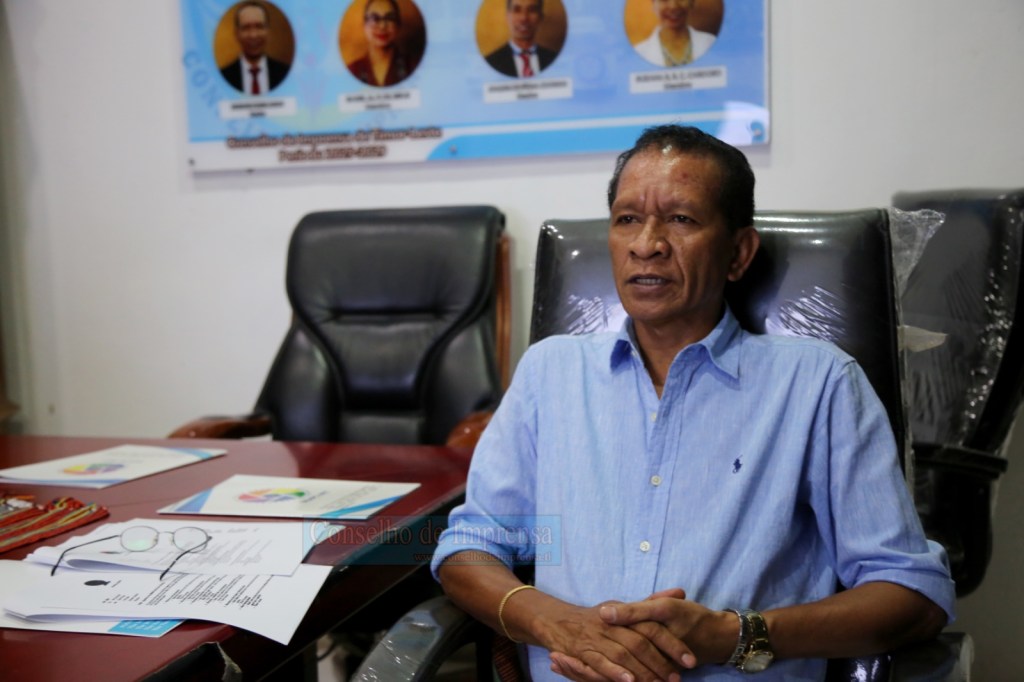
Dili – The Timor-Leste Press Council (CITL) host  the Permanent Members Meeting of the Southeast Asian Press Council-Network (SEAPC-Net), held online (via Zoom) on Thursday, 13 November 2025.

The SEAPC-Net Permanent Members Meeting began with welcome remarks from the SEAPC-Net Secretary General, Benevides Correia Barros, followed by an introduction of the new President of the Timor-Leste Press Council, who also serves as the President of the SEAPC-Net Network, Mr. António Secar Mali. Mr. Chavarong was also re-elected for a new term at the National Press Council of Thailand (NPCT). In addition, Mr.Totok, representing the Indonesia Press Council (DPI), introduced the newly appointed president of DPI.

During the meeting, SEAPC-Net members—including the Indonesia Press Council, the National Press Council of Thailand (NPCT), the Myanmar Press Council, and the Timor-Leste Press Council—agreed to convene the General Assembly in March 2026 in Thailand. At the conclusion of the meeting, Permanent Members also agreed on setting SEAPC-Net’s annual membership fee at USD 100.00. The format and payment procedures will be prepared by Timor-Leste.

According to the plan, the SEAPC-Net Organization Meeting for 2026 will take place online in January 2026 and will be hosted by the Timor-Leste Press Council.

Publications

DDF 2025 Recommendation (10-05-2025, Salaun Multiuzo GMN)

Following the presentations and discussions by all speakers during today’s Dili Dialogue Forum, several key issues were identified as strategic highlights. These points are presented as recommendations to be considered and acted upon in order to strengthen the media landscape and digital infrastructure in Timor-Leste. The key recommendations are as follows:

  1. Journalists in Timor-Leste must carry out their work with integrity, honesty, and dedication. It is also essential that the government respects and guarantees freedom of expression, creating an open and safe space for journalists to operate. The Press Council must ensure that the media operates freely, but also with responsibility. Moreover, AI also one of the central pillar for democracy, relevant institutions should begin to analyse the current and future impact of Artificial Intelligence (AI) in developing countries such as Timor-Leste, taking into account the risks it may present to journalism and public discourse.
  2. AI can be a powerful tool to assist journalists, especially in content creation, data analysis, and translation. However, AI should not replace journalists work. It is critical to maintain human oversight, ethical judgment, and context in reporting. Clear policies should be developed to regulate the dissemination of AI-generated content. Linguistic institutions in Timor-Leste are encouraged to explore the use of Tetum in AI development to ensure that national language and identity are preserved in the digital era and Strengthening digital literacy
  3. The Press Council must actively support and promote professionalism among journalists, particularly in key sectors such as health, education, and the economy. The current situation of journalism in Timor-Leste requires the Council to act as a catalyst for quality and ethical journalism. Journalists should commit to publishing credible, accurate, transparent, and honest information.
  4. Continue Supporting media to develop Skills to adapt new technology,  increase collaboration and information-sharing between media, government and civil society Timorense and International collaboration Informed by local context, knowledge and two-way learning , the intensive discussion between the government civil society, media and the all the network operator and the relevant entities. The media must also take a stronger stance in advocating against gender-based violence, including online violence.
  5. Collaboration with stake holders to ensure a successful transition to a digital economy submarine cable important infrastructure develops opportunities various sector in Timor-Leste.

Publications

THE TIMOR-LESTE PRESS COUNCIL HOLDS MEETING WITH THE VICE MINISTRY OF ASEAN AFFAIRS

Dili – On Thursday, 9 January 2025, the Timor-Leste Press Council (TLPC) held a meeting with Milena Rangel, the Vice Minister of ASEAN Affairs, to discuss the role and work of the Timor-Leste Press Council within the Southeast Asian Press Council Network (SEAPC-Net).

The meeting, which took place at the Ministry of Foreign Affairs and Cooperation in Praia dos Coqueiros, Dili, was aimed at seeking assistance from the Vice Ministry of ASEAN Affairs to facilitate the Timor-Leste Press Council’s participation in important meetings of SEAPC-Net’s regular members, including those held in Thailand and other Southeast Asian countries.

In addition to this, the Timor-Leste Press Council and the Vice Ministry of ASEAN Affairs discussed ways to strengthen cooperation between TLPC and the Ministry of Foreign Affairs and Cooperation, with the aim of involving TLPC in important work within the ASEAN Organization.

Participants in the meeting included Vice Minister of ASEAN Affairs Milena Rangel, TLPC Member Benevides Correia Barros, Executive Director Antonio Dias, Director of Institutional Relations and Information, Altino da Cruz Freitas, SEAPC-Net Secretariat Representative Juliana I. M. Abilio, and Cooperation Assistance Estanislau Lourdes.

The Southeast Asian Press Council Network (SEAPC-Net) plays an important role in promoting freedom of expression and press freedom in Southeast Asia, including through advocacy efforts and capacity-building programs for media professionals and journalists.


https://conselhoimprensa.tl/eventu/atividade/755-conselho-de-imprensa-hala-o-audiensia-ho-vise-ministra-ba-asuntu-asean

Publications

Meeting SEAPC-Net in Dili

Timor Leste Press Council Chair Otelio Ote, also the Chair of SEAPC-Net, chaired a meeting on Thursday (9/5) in Dili, Timor Leste.

The meeting discussed SEAPC-Net’s programs for the coming years. One proposed program is inviting the Press Council or similar Southeast Asian institutions to become members.

It also discussed plans to invite media organizations and Southeast Asian journalists to become associate members.

SEAPC-Net is also preparing a secretariat to organize the next program.

Present at the SEAPC-Net meeting were representatives from the Indonesian Press Council Asep Setiawan and representatives from the Thai Press Council Anucha Charoenpo. From Timor Leste, Press Council members Benevidas, Isabel M. F. de Jesus, Amito Qonusere Araújo and Francisco B.S. da Costa were present.

Publications

REPORT OF SOUTHEAST ASIAN PRESS COUNCILS NETWORK (SEAPC-NET)2019-2023

The comprehensive SEAPC-NET activity report offers an extensive analysis of the network’s initiatives, covering the period from its establishment in 2019 to 2023. Despite encountering unforeseen challenges presented by the global COVID-19 pandemic, SEAPC-NET demonstrated remarkable resilience and adaptability, steadfastly pursuing its mission to promote collaboration and elevate media practices across Southeast Asia. Throughout this period, the network remained committed to its objectives, successfully navigating the complexities brought about by the pandemic and emphasizing the importance of cooperation and innovation in the region’s media landscape.

When SEAPC-NET was established in 2019, little could have prepared its founding members for the unprecedented global outbreak of COVID-19 that would transform the landscape of human activities. In the wake of the pandemic, SEAPC- NET, like many other organizations, swiftly transitioned to virtual platforms for its community and government engagements. The reliance on virtual meetings became emblematic of the organization’s commitment to adapt and persevere during these challenging times.

SEAPC-NET’s activities from 2020 to 2022 were mainly conducted in virtual spaces. This reflects the organization’s commitment to prioritize the safety and well-being of its participants. During this period, SEAPC-NET navigated the changing circumstances due to COVID-19 and carefully monitored the pandemic’s decline while recognizing the need to continue being cautious when organizing physical events. Virtual meetings became the norm, enabling ongoing dialogue and collaboration between the four member countries and the wider press community in Southeast Asia.


In the initial stages of SEAPC-NET’s journey, the focus was on strengthening the organization’s infrastructure. This involved establishing a structured secretariat, improving correspondence and administrative processes, designing the SEAPC-NET logo, and developing an internet-based SEAPC-NET data center hosted at seapc-net.org. These efforts laid the foundation for SEAPC-NET’s operational efficiency and visibility.In late 2021, a significant milestone was achieved when SEAPC-NET members agreed to expand membership categories to include “associated members.”

These new members encompassed press companies, journalist organizations, and institutions affiliated with and supportive of the press and journalists in Southeast Asia. Moreover, there were discussions about extending this non-permanent membership category to European entities. However, owing to the ongoing challenges posed by the COVID-19 pandemic, the implementation of this expansion remained pending until 2023. The General Assembly scheduled for November in Bali is anticipated to provide a platform for the decision-making process regarding the inclusion of permanent members.This report briefly outlines the pivotal role played by the Secretariat in SEAPCNET’s activities. From the creation of the organization’s logo to the development of the search-net.org website, the Secretariat has been instrumental in supporting the network’s initiatives and ensuring the smooth functioning of various activities.

SEAPC-NET report not only summarizes the activities and their outcomes but also includes an array of supporting documents, such as photographs, news articles from various countries, and other evidential materials. These documents serve as undeniable proof of the network’s commitment to transparency and accountability, and also serve as valuable resources for future planning and decision-making. Without a doubt, this SEAPC-NET activity report is a testament to the organization’s dedication to its mission, despite the global pandemic’s challenges. It provides a rock-solid foundation for future activities, serves as a crucial resource for the SEAPC-NET board, and underscores the network’s unshakable commitment to promoting professional journalism and media ethics across Southeast Asia and beyond.

Publications

Meeting of SEAPC-Net Members

The Southeast Asian Press Council Network (SEAPC-Net) is gearing up for its general meeting, scheduled to take place in Bali in early December 2023. While the exact date is yet to be finalized, discussions will conclude no later than the middle of December 2023. This significant event is distinct from the Bali Democracy Forum and is slated to precede it on the calendar.

Among the key items at the meeting on October 25, 2023, which started at 2 PM Indonesian Western Time, was the formal handover of Indonesia’s chairmanship to other member nations. This leadership transition is expected to be a pivotal moment in the organization’s history.

Transportation and accommodation arrangements for the participants will be coordinated by the Press Council of Indonesia, with details set to be communicated promptly to all attendees.

Several other proposed agenda items are expected to be addressed during the General Meeting, including a revision of SEAPC-Net’s constitution, an expansion of membership to the region, and discussions on how the media can adapt and respond to the evolving media landscape.

The list of participants includes prominent figures in the field, such as Ninik Rahayu, Totok Suryanto, Sudrajat Ema Mukarramah, Wawan Prasetyo, Mr. Chavarong, Mr. Myo Tun, Mr. Otelio Ote, Mr. Beny, Mr. Antonio Dias, Mr. Kavi, Ms. Isabel, and Ms. Sumonchaya Prang.

Mr. Asep Setiawan and Mr. Sudrajat served as the moderators and MCs for the event, ensuring smooth proceedings and discussions.

Documentation for the meeting preparation was managed by Ms. Intan R and Mr. Wawan.

As the date of the SEAPC-Net General Meeting draws nearer, anticipation is building within the Southeast Asian press community. The meeting promises to be a forum for critical discussions and strategic decisions that will shape the future of journalism and press freedom in the region.

Publications

Term of Reference International Seminar Exploring Media Collaboration Amidst Southeast Asia’s Digital Ecosystem

Introduction

The development of digital technology has had a profound influence on the way the media works and the media business model in Southeast Asia. The digital platform has encouraged the traditional mass media to reach the public faster and broader. Media content delivery is no longer dependent on conventional networks such as print media through direct channels to the public and electronic media through traditional radio or television channels only. All media content can now be accessed via digital platforms using computers, smartphones, or other gadgets.

Likewise, Southeast Asia’s mass media business model has also undergone drastic changes due to interference from digital platforms. The challenge is that the owner of these digital companies came from the United States. Therefore, these companies are generally out of reach of the laws of the countries in Southeast Asia. That is why digital platform companies take business value in these digital platforms, hence, mass media advertising. It means that the mass media revenue has been declining. This impact has already been experienced in Indonesia, Thailand, and several other countries in the Southeast Asian region.

The impact of this digital platform on the press in Southeast Asia has already been noticed before the COVID-19 pandemic. Information traffic through digital platforms is very intensive, especially with the presence of social media. After COVID19 taken place, the impact of this digital technology is getting stronger. The implication is that the press will face challenges to survive in the digital ecosystem.

One of the efforts to face the challenges of the digital ecosystem is media collaboration in the Southeast Asia region. This collaboration can be started by sharing experiences of mass media in the era of digital platforms. Then from sharing these experiences, a joint solution could be found so that the press could survive for an extended period. In addition, the media in Southeast Asia could also learn from other countries how to adapt to the media that is facing the development of the digital ecosystem.

As it is explained that the press has a role in democratic life in Southeast Asia, it is essential to maintain the existence of the media despite the new challenges of the digital ecosystem. With this new digital ecosystem, the press should have a broader reach to the public in raising issues related to the public interest. Likewise, the public has wide access to the media to determine political, economic, social, and cultural developments in their environment. International seminar on the need for collaboration mass media in facing the challenges of the digital ecosystem is needed to understand and find solutions for how the press survive today and create content that could be accepted by the audience anywhere and anytime.

Objectives

  1. To discuss various challenges of a digital ecosystem for mass media in Southeast Asia.
  2. To exchange ideas on how the press in the region deals with the digital ecosystem.
  3. To discuss a model for collaboration among Southeast Asia’s media in facing digital ecosystem.

Outcomes

  1. Seminar Proceeding
  2. Reporting

Panelists and Topics

First Session (Duration: +/- 60 mins, including discussion)  Third S Countries: Indonesia, Thailand & Timor Leste Topics: In Searching Model of Collaboration among Southeast Asia Media in Digital Ecosystem (How collaboration could be a powerful way in dealing with digital platform ecosystem) Speakers: Bambang Harymurti (Senior Journalist from Indonesia); Agus Sudibyo (Indonesian Press Council) Kavi Chongkittavorn (National Press Council of Thailand). Virgili da Silva Guterres (Conselho de Imprensa, Timor-Leste) 

Second Session (Duration: +/- 60 mins, including discussion) Countries: Malaysia, Vietnam, Philippines Topics: Content Creation in Digital Ecosystem, Information Dissemination for Millennials, Business Model for Media in Digital Ecosystem Speakers: Tan Sri Johan Jaaffar (Malaysian Senior Journalist)

Third Session (Duration: +/- 60 mins, including discussion) Countries: Singapore, Laos, Myanmar, Cambodia Topics: Speakers: Joon-Nie Lau/ WAN IFRA (Singapore), Sao Phal Niseiy / Thmey Thmey (Cambodia)

Time

August 6, 2021
13.00 – 16.00 Indonesian Western Time
Zoom Virtual Meeting

Agenda

12.45-13.00 Panelists and Participants Join the Meeting
13.00-13.15 Opening Remarks from Chairperson SEAPC-Net Mohammad Nuh
13.15-15.50 International Seminar
15.50-16.00 Closing Remarks

Publications

International Seminar Exploring Media Collaboration Amidst Southeast Asia’s Digital Ecosystem