Publications

Meeting of SEAPC-Net Members

The Southeast Asian Press Council Network (SEAPC-Net) is gearing up for its general meeting, scheduled to take place in Bali in early December 2023. While the exact date is yet to be finalized, discussions will conclude no later than the middle of December 2023. This significant event is distinct from the Bali Democracy Forum and is slated to precede it on the calendar.

Among the key items at the meeting on October 25, 2023, which started at 2 PM Indonesian Western Time, was the formal handover of Indonesia’s chairmanship to other member nations. This leadership transition is expected to be a pivotal moment in the organization’s history.

Transportation and accommodation arrangements for the participants will be coordinated by the Press Council of Indonesia, with details set to be communicated promptly to all attendees.

Several other proposed agenda items are expected to be addressed during the General Meeting, including a revision of SEAPC-Net’s constitution, an expansion of membership to the region, and discussions on how the media can adapt and respond to the evolving media landscape.

The list of participants includes prominent figures in the field, such as Ninik Rahayu, Totok Suryanto, Sudrajat Ema Mukarramah, Wawan Prasetyo, Mr. Chavarong, Mr. Myo Tun, Mr. Otelio Ote, Mr. Beny, Mr. Antonio Dias, Mr. Kavi, Ms. Isabel, and Ms. Sumonchaya Prang.

Mr. Asep Setiawan and Mr. Sudrajat served as the moderators and MCs for the event, ensuring smooth proceedings and discussions.

Documentation for the meeting preparation was managed by Ms. Intan R and Mr. Wawan.

As the date of the SEAPC-Net General Meeting draws nearer, anticipation is building within the Southeast Asian press community. The meeting promises to be a forum for critical discussions and strategic decisions that will shape the future of journalism and press freedom in the region.

Archives

Presentasi SEAPCNET

Publications

Term of Reference International Seminar Exploring Media Collaboration Amidst Southeast Asia’s Digital Ecosystem

Introduction

The development of digital technology has had a profound influence on the way the media works and the media business model in Southeast Asia. The digital platform has encouraged the traditional mass media to reach the public faster and broader. Media content delivery is no longer dependent on conventional networks such as print media through direct channels to the public and electronic media through traditional radio or television channels only. All media content can now be accessed via digital platforms using computers, smartphones, or other gadgets.

Likewise, Southeast Asia’s mass media business model has also undergone drastic changes due to interference from digital platforms. The challenge is that the owner of these digital companies came from the United States. Therefore, these companies are generally out of reach of the laws of the countries in Southeast Asia. That is why digital platform companies take business value in these digital platforms, hence, mass media advertising. It means that the mass media revenue has been declining. This impact has already been experienced in Indonesia, Thailand, and several other countries in the Southeast Asian region.

The impact of this digital platform on the press in Southeast Asia has already been noticed before the COVID-19 pandemic. Information traffic through digital platforms is very intensive, especially with the presence of social media. After COVID19 taken place, the impact of this digital technology is getting stronger. The implication is that the press will face challenges to survive in the digital ecosystem.

One of the efforts to face the challenges of the digital ecosystem is media collaboration in the Southeast Asia region. This collaboration can be started by sharing experiences of mass media in the era of digital platforms. Then from sharing these experiences, a joint solution could be found so that the press could survive for an extended period. In addition, the media in Southeast Asia could also learn from other countries how to adapt to the media that is facing the development of the digital ecosystem.

As it is explained that the press has a role in democratic life in Southeast Asia, it is essential to maintain the existence of the media despite the new challenges of the digital ecosystem. With this new digital ecosystem, the press should have a broader reach to the public in raising issues related to the public interest. Likewise, the public has wide access to the media to determine political, economic, social, and cultural developments in their environment. International seminar on the need for collaboration mass media in facing the challenges of the digital ecosystem is needed to understand and find solutions for how the press survive today and create content that could be accepted by the audience anywhere and anytime.

Objectives

  1. To discuss various challenges of a digital ecosystem for mass media in Southeast Asia.
  2. To exchange ideas on how the press in the region deals with the digital ecosystem.
  3. To discuss a model for collaboration among Southeast Asia’s media in facing digital ecosystem.

Outcomes

  1. Seminar Proceeding
  2. Reporting

Panelists and Topics

First Session (Duration: +/- 60 mins, including discussion)  Third S Countries: Indonesia, Thailand & Timor Leste Topics: In Searching Model of Collaboration among Southeast Asia Media in Digital Ecosystem (How collaboration could be a powerful way in dealing with digital platform ecosystem) Speakers: Bambang Harymurti (Senior Journalist from Indonesia); Agus Sudibyo (Indonesian Press Council) Kavi Chongkittavorn (National Press Council of Thailand). Virgili da Silva Guterres (Conselho de Imprensa, Timor-Leste) 

Second Session (Duration: +/- 60 mins, including discussion) Countries: Malaysia, Vietnam, Philippines Topics: Content Creation in Digital Ecosystem, Information Dissemination for Millennials, Business Model for Media in Digital Ecosystem Speakers: Tan Sri Johan Jaaffar (Malaysian Senior Journalist)

Third Session (Duration: +/- 60 mins, including discussion) Countries: Singapore, Laos, Myanmar, Cambodia Topics: Speakers: Joon-Nie Lau/ WAN IFRA (Singapore), Sao Phal Niseiy / Thmey Thmey (Cambodia)

Time

August 6, 2021
13.00 – 16.00 Indonesian Western Time
Zoom Virtual Meeting

Agenda

12.45-13.00 Panelists and Participants Join the Meeting
13.00-13.15 Opening Remarks from Chairperson SEAPC-Net Mohammad Nuh
13.15-15.50 International Seminar
15.50-16.00 Closing Remarks

Publications

International Seminar Exploring Media Collaboration Amidst Southeast Asia’s Digital Ecosystem

Publications

Congratulations Message for the National Press Council of Thailand

Dear friends and colleagues at the National Press Council of Thailand (NPCT),


Southeast Asian Press Councils Network would like to extend our heartfelt
congratulations on the twentieth fourth anniversary of the National Press Council of
Thailand (NPCT).


The NPCT plays very important role in developing collaboration among press
council in the region. In various activities organized by SEAPC-Net, the NPCT
shows eagerness and sincere contribution which is very important in media and
journalist empowerment in Southeast Asia. I wish to express my sincere gratitude for
all the efforts made by NPCT.


We wish that our future partnership and endeavor would get stronger in many
years to come so that it could benefit our society more, because just like the old
saying says, “well-informed public makes better decisions”. SEAPC-Net also wishes
the NPCT all the future success in developing new chapter of the press freedom in the
country and the region that further enriches our cherished and promising partnership.

Sincerely Yours,
Mohammad Nuh
Chairperson of SEAPC-Net

Publications

Joint Statement SEAPC-Net Solidarity in Supporting Press Freedom in Myanmar

The latest situation in Myanmar where a political transition has occurred has implications for the press in the country. For that reason, the SEAPC-Net has adopted a joint statement as below:

  1. SEAPC-Net expresses concern about the restrictions on civil society, journalists and media workers in Myanmar.
  2. SEAPC-Net hopes that an enabling environment for media freedom and safety of journalists to inform the public without any arrest or intimidation will be ensured.
  3. SEAPC-Net would like to express sympathy for the Myanmar Press Council, hoping that in this new political situation, it can continue to safeguard universal rights relating to freedom of expression and information.
  4. SEAPC-Net reiterates its strong backing for the Myanmar Press Council in supporting freedom of press in the country.
  5. SEAPC-Net reiterates its position for maintaining solidarity and cooperation among the press community in Southeast Asia in establishing press freedom in the region.

Jakarta, March 12, 2021
Mohammad NUH
Chairperson SEAPC-Net Chairman of Indonesian Press Council
Email: sekretariat@dewanpers.or.id

Chairman of Myanmar Press Council, Myo Thant Tin

Phone: +09448026326

Email: mmpresscouncil@gmail.com

Chairman of National Press Council of Thailand, Chavarong Limpattamapanee

Phone: +66815627175

Email: info@presscouncil.or.th

Chairman of Timor-Leste Press Council, Virgilio da Silva Guterres

Phone: +670 73173198

Email: virgilio.guterres@conselhoimprensa.tl

Secretary General SEAPC-Net, Asep Setiawan

Phone: +628567980840

Email: asepsetia@gmail.com

Publications

Mr. Chavarong elected as chairman Thailand NPC

March 9, 2021 at the Thai Journalists Association Building There was a meeting of the Committee of the National Press Council No. 1/2021, where the important agenda is to elect a chairperson and a vice president, setting up various sub-committees. Along with accepting assignments from the 9th National Press Council.

The meeting assigned the most senior director, Miss Putsadee Keetvaranat, a director from the Xin Zhongyen newspaper. Act as the chairman of the meeting In which the first agenda is to elect the chairman of the press council In which the meeting resolved to elect Mr. Chavarong Limpattamapanee From Thairath newspaper as the first chairman of the National Press Council with a unanimous vote, Ms. Phutsadee assigned Mr. Chavarong to Act as the chairman of the meeting according to the agenda.

In this regard, the meeting considered the appointment of directors in various positions, consisting of 3 Vice Chairman of the Council, namely Ms. Nataya Chetchotiros from the Bangkok Post newspaper. Is the first vice president, Mr. Weerasak Chotivanich, a legal expert. Mr. Sarawut Saetiew from Chiang Mai News Online, Chiang Mai Province, was the third vice president.For the position of Secretary-General, namely Mr. Chai Pathakamin from the Daily News newspaper. Ms. Nipawan Kaewrakmuk from Krungthep Business Newspaper He is the 1st Deputy Secretary-General and Mr. Phuwasit Suksai from Southern Focus Newspaper, Songkhla Province, is the second Deputy Secretary-General.

In addition, the meeting also appointed nine ethics committees, namely, 1. Mr. Korkhet Chantalertlak. From Thai PBS television station 2. Ms. Nipawan Kaewrakmuk from the Bangkok Business Newspaper 3. Mr. Jakkrit Waewklihong from Trat Province referendum newspaper 4. Mr. Pramote Finkupra, a qualified member with media experience 5. Ms. Supinya Klangnarong Expert Member in Consumer Protection6. Mr. Weerasak Chotivanich Expert in Legal 7. Mr. Somchai Homlor, Human Rights Lawyer And a former member of the Human Rights Commission National Press Council 8. Mr. Udom Thipprai Kaset, former Executive Director Association of Journalists and Journalists of Thailand and 9. Assoc. Prof. Dr. Sakul Sri Srisarakham, Head of Convergent Journalism Faculty of Communication Arts Panyapiwat Institute of Management.

For subcommittee in various faculties The meeting passed a resolution to appoint the chairman of the four sub-committees by the secretary sub-committee. Appoint Ms. Nataya Chetchotiros to be the Chairperson of the Academic Subcommittee, appointing Assoc. Prof. Dr. Sukanya Buranadechachai, an expert in journalism, to be the Chair of the Foreign Subcommittee. Experienced in the media as the Chairman and the Public Relations Subcommittee appointed Mr. Swit Bamrungsuk from Siamrath Newspaper to be the president.

Then it is the assignment. The 9th session of the National Press Council congratulated the 1st session of the National Press Council and gave the issue of moral promotion. And the ethics of the media That must be based on the principle of work Including reducing conflicts in the problematic Thai societyWhile the first chairman of the National Press Council said that the National Press Council There must still be a mission to accelerate the amendment of the ethical regulations. Including the media performance guidelines in line with the changing media landscape It must be developed to cover the functions of all media areas, not just one medium.


Source: https://www.msn.com/th-th/news/national/%E0%B8%8A%E0%B8%A7%E0%B8%A3%E0%B8%87%E0%B8%84%E0%B9%8C-%E0%B8%99%E0%B8%B1%E0%B9%88%E0%B8%87%E0%B8%9B%E0%B8%A3%E0%B8%B0%E0%B8%98%E0%B8%B2%E0%B8%99%E0%B8%AA%E0%B8%A0%E0%B8%B2%E0%B8%AA%E0%B8%B7%E0%B9%88%E0%B8%AD%E0%B8%A1%E0%B8%A7%E0%B8%A5%E0%B8%8A%E0%B8%99%E0%B8%AF-%E0%B8%8A%E0%B8%B8%E0%B8%94%E0%B9%81%E0%B8%A3%E0%B8%81/ar-BB1eoS83

Publications

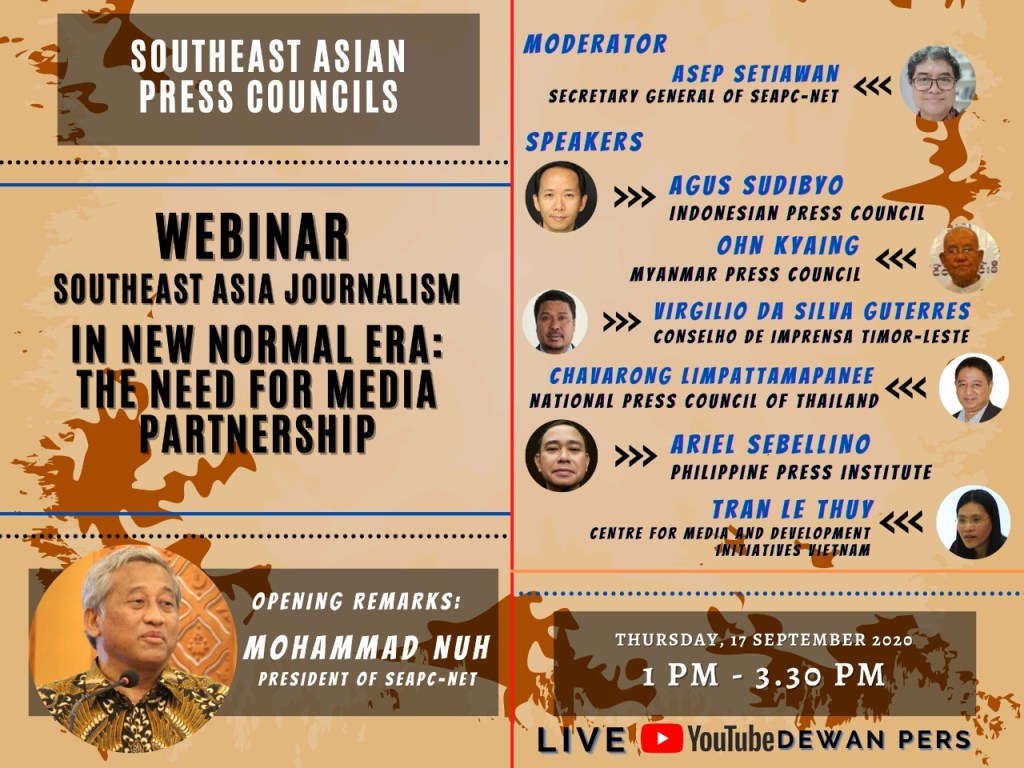
Webinar Southeast Asia Journalism in New Normal Era

Publications

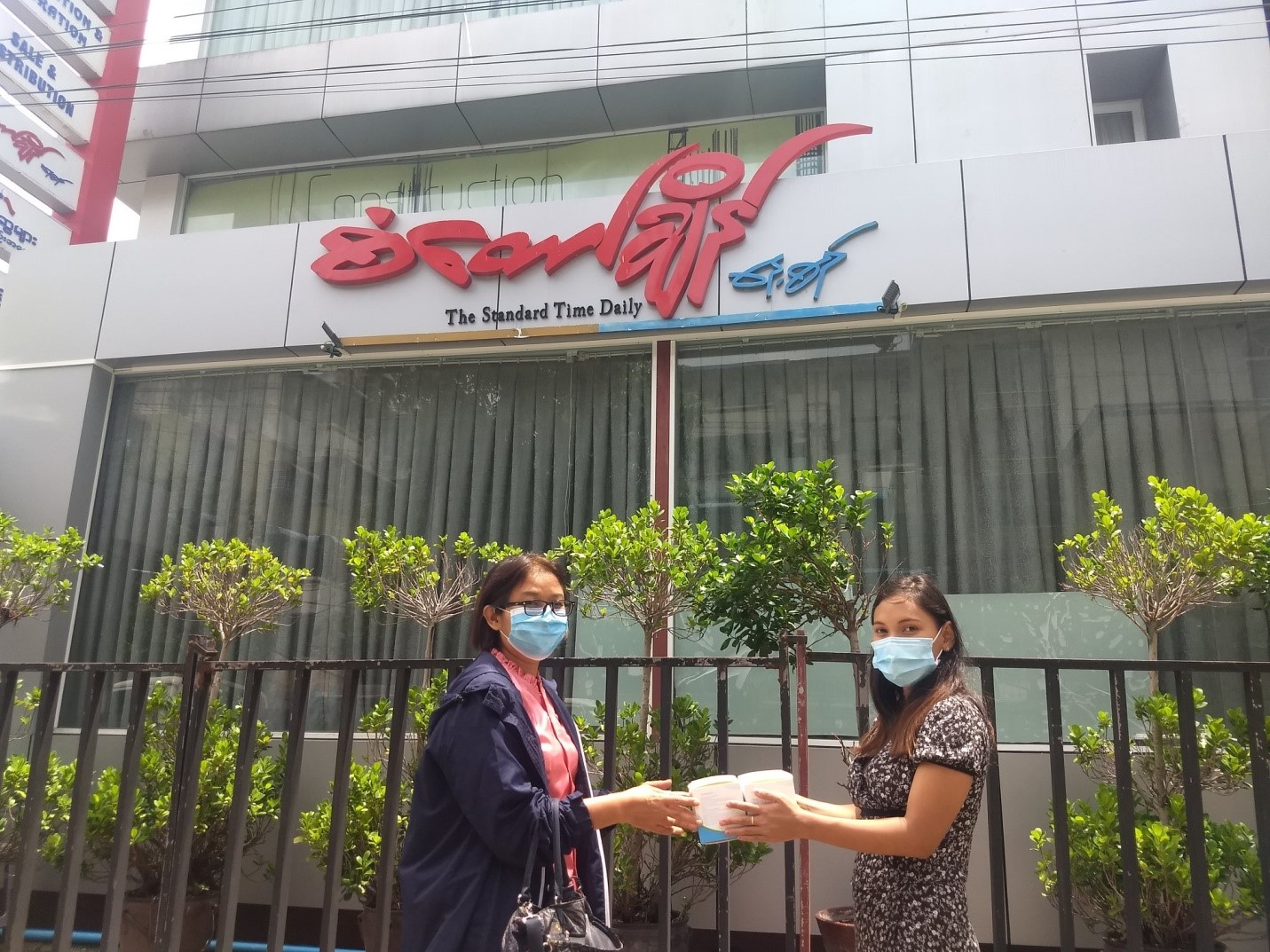
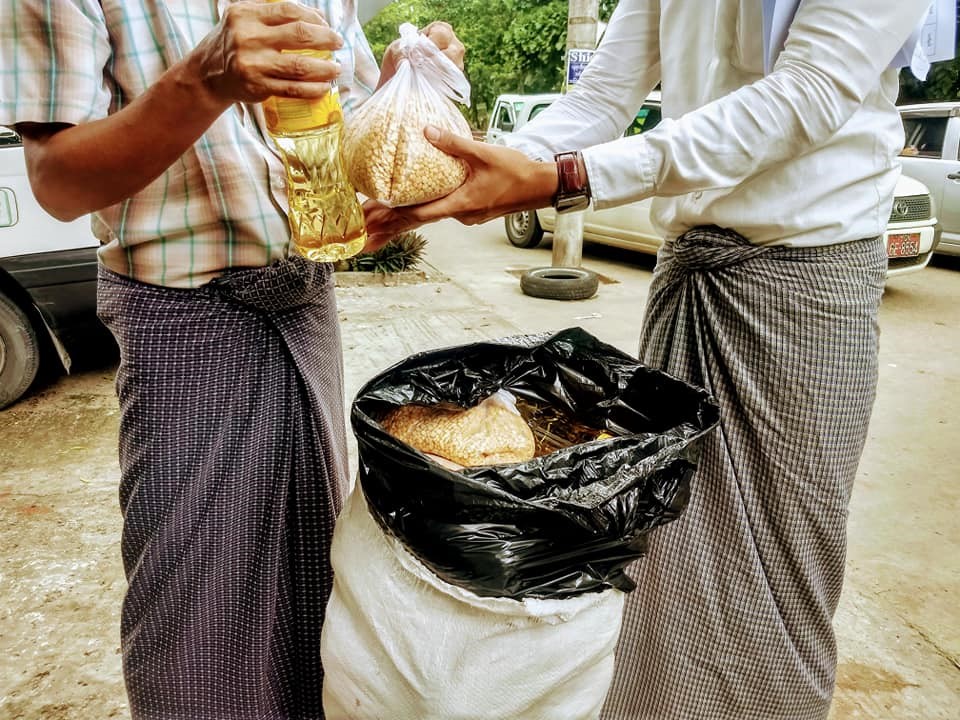
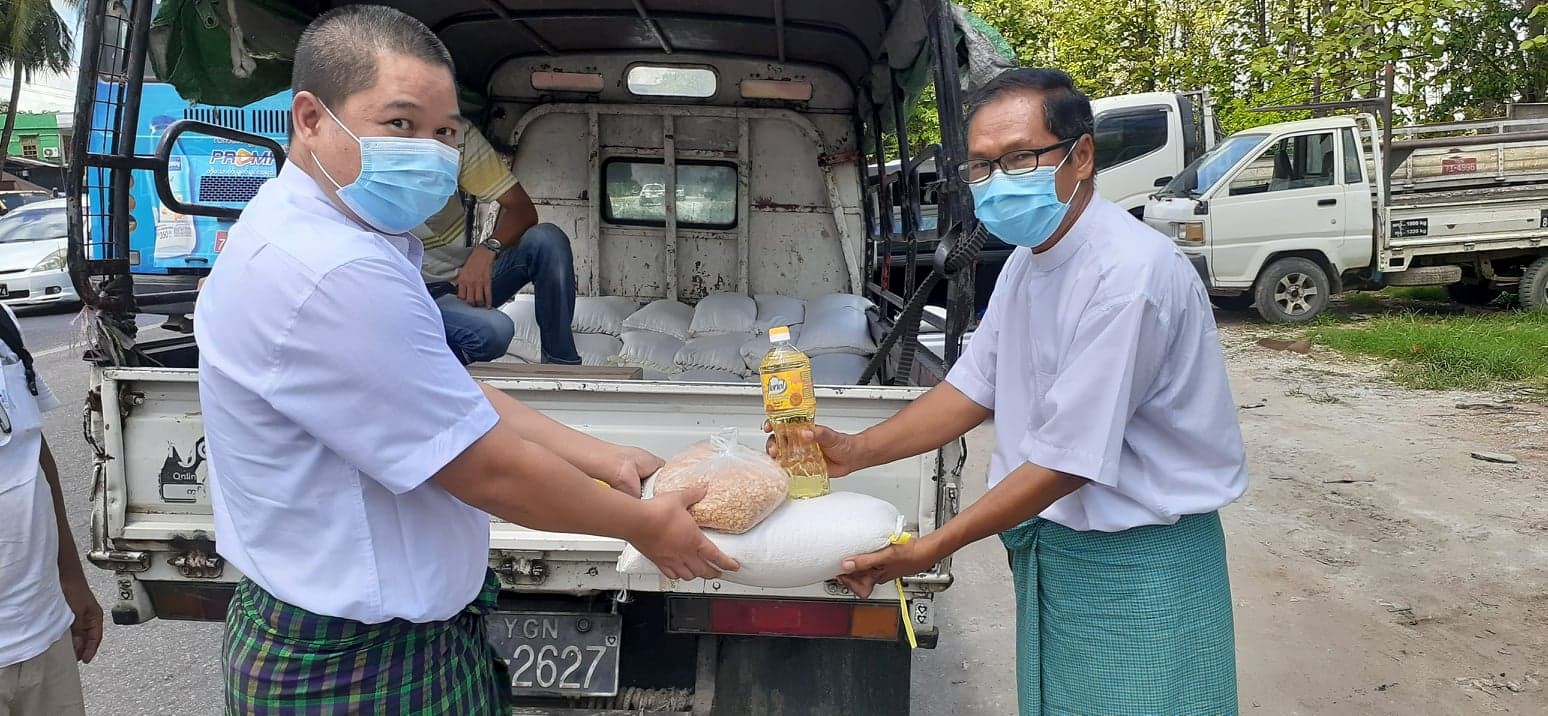
Myanmar Press Council has been providing some goods to Journalists who really need the help during the COVID-19 disease, pandemic period

Myanmar Press Council provided some goods to Journalists who were laid off and facing the salary reduction from their Media agencies.

            We provided the goods not only Yangon Journalists but also regional Journalists. Now, it’s five times.

            In the first time, we provided 25 journalists in Yangon and 6 regional journalists (the totals are 31 journalists) on 12 May, 2020.

            The Second time is 68 journalists in Yangon and 7 regional journalists (the totals are 75 journalists) on 20 May, 2020.

            The third time is 32 journalists in Yangon and 4 regional journalists (the totals are 36 journalists) on 27 May, 2020.

            The fourth time is 20 journalists in Yangon and 19 regional journalists (the totals are 39 journalists) on 7 June, 2020.

            In the fifth time, 12 journalists in Yangon and 14 regional journalists (the totals are 26 journalists) on 11 July, 2020.

            Nowadays, Myanmar Press Council supported the total journalists are 207 who really need during this pandemic period (COVID – 19).

            Some journalists were kept in quarantine while they’re working during pandemic period. Myanmar Press Council provided cash assistance those journalists were kept in quarantine.            

Myanmar press Council has provided cash assistance (2 Lakh – MMK) to 8 Journalists who were kept in quarantine because they worked in the area of COVID – 19 suspected cases.